By Luke Huddleston | Marshall Land Brokers & Auctioneers marshallauction.com
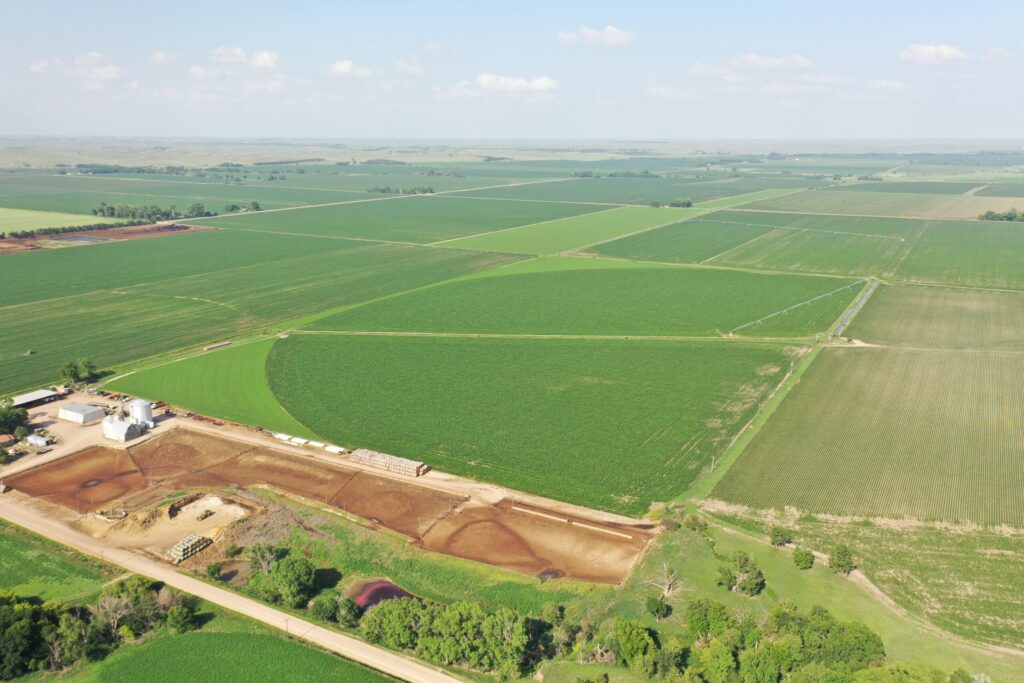
We are halfway through 2026, and I think it is a good time to stop and take stock of what is actually happening in the Nebraska land market. There is a lot of information out there, and statewide averages only tell part of the story. I want to share the real picture, from the ground up.
I am going to share two things in this post. First, where we stand at Marshall Land Brokers through the first half of this year. Second, what the University of Nebraska-Lincoln’s own data tells us about land values right now, broken down by the regions that matter most to our clients.
What has the land market looked like so far in 2026?
Through the first half of 2026, Marshall Land Brokers has closed 45 properties across 12 counties in Nebraska and into Kansas, representing $42.5 million in total land sales. That is 7,637 acres of Nebraska and Kansas land sold at an average of roughly $5,568 per acre across all property types.
That number matters. It is not a survey average. It is not a regional estimate. It is what buyers actually paid for real properties in this market, handled by our team, closed and recorded.
The 12 counties we have worked in are concentrated in central Nebraska, which is where we have built our reputation and where we know the ground, the buyers, and the local market dynamics better than anyone. Also, those sales included land sold in the Sandhills and Western Nebraska. One of those sales extended into Kansas, reflecting the growing interest we see from buyers and sellers on both sides of the state line.
If you own land in central Nebraska or the Sandhills and you are wondering what your ground is worth, the most honest answer I can give you is this: the market is still strong, buyers are still active, and the right property handled the right way is still bringing excellent prices.
What is farmland worth per acre in Nebraska in 2026?
This is where I want to take a moment, because the statewide average number that gets published every year does not always reflect what an individual landowner’s property is worth.
The 2026 Nebraska Farmland Values and Cash Rental Rates Preliminary Report from the University of Nebraska-Lincoln shows a statewide average agricultural land value of $3,905 per acre, down 1% from 2024’s record. That number represents every acre of every land type across all eight agricultural districts in Nebraska blended into a single figure. It includes Sandhills grassland, Panhandle dryland, and river bottom irrigated ground all averaged together into one number.
That average covers a wide range of land types and regions. Here is what the district-level data actually shows.
Central Nebraska is one of the strongest-performing districts in the state right now:
- Center Pivot Irrigated Cropland: $9,155 per acre, up 2%
- Tillable Grazing Land: $3,290 per acre, up 9%
- Nontillable Grazing Land: $2,405 per acre, up 7%
South Nebraska is holding its own as well:
- Center Pivot Irrigated Cropland: $8,490 per acre, up 2%
- Tillable Grazing Land: $2,940 per acre, up 1%
- Nontillable Grazing Land: $1,945 per acre, up 5%
North Nebraska tells a more mixed story, with irrigated cropland down 5%, though grazing land is performing strongly:
- Center Pivot Irrigated Cropland: $4,760 per acre, down 5%
- Tillable Grazing Land: $1,710 per acre, up 6%
- Nontillable Grazing Land: $1,085 per acre, up 9%
Here is the point I want landowners in our region to understand. The statewide average decline in center pivot irrigated cropland is a broad brush painted across the entire state. The districts where we are most active — Central and South Nebraska — have not only held on, they have moved slightly higher. That is a story of resilience and quality that the headline number does not tell.
Source: UNL 2026 Nebraska Farmland Values and Cash Rental Rates Preliminary Report, Jim Jansen, UNL Department of Agricultural Economics.
What factors affect land value?
In my experience, the statewide survey numbers are a starting point, not a finish line. What actually drives the value of a specific parcel comes down to a handful of things I look at every time I walk a property.
Soil quality. In central Nebraska, Holdrege silt loam and similar productive soils command a premium because they consistently yield. Buyers pay for proven productivity, not potential.
Water. Certified irrigation rights backed by a reliable aquifer position are worth more than the numbers suggest on paper. Central Nebraska’s position on the Ogallala Aquifer remains one of the strongest in the entire High Plains region.
Access and infrastructure. Road access, grain storage, livestock improvements, and well infrastructure all move the needle. A solar-powered well on a pasture tract, for example, is becoming increasingly attractive to buyers in today’s market.
Market access. Proximity to ethanol plants, feedlots, and livestock markets adds real value. Buyers running an operation think about basis and haul distance every single day.
Competition. This is the one most landowners underestimate. The difference between a fair price and the best possible price is often simply how many qualified buyers are in the room. That is what a well-run auction creates.
How do I get my land appraised?
A formal appraisal from a certified general appraiser is one option, and in some estate or financing situations it is required. For a landowner simply trying to understand what their ground would bring in today’s market, a broker’s opinion of value rooted in recent comparable sales is often more current and more useful.
Appraisals look backward at closed sales. A good land broker knows what is under contract right now, who the active buyers are today, and what similar ground brought at auction last month. That intelligence is what positions your property correctly from the start.
How much is an acre of farmland worth?
The only honest answer is: it depends on your ground, your location, and who is in the market right now.
What I can tell you is that through the first half of 2026, buyers in central Nebraska are paying real money for quality land. Irrigated cropland in our core market is averaging over $9,000 per acre. Grassland and pastureland values are climbing. And the landowners who have worked with us this year have seen the results firsthand across 45 closed transactions.
If you are thinking about selling, or simply want to know where you stand, the conversation starts with a phone call.
Call Marshall Land Brokers at 308-234-6266 or visit marshallauction.com. Let’s talk about what your ground is worth.
Sources
- UNL 2026 Nebraska Farmland Values and Cash Rental Rates Preliminary Report — Jim Jansen, UNL Department of Agricultural Economics
- UNL Nebraska Farm Real Estate Market Survey — Center for Agricultural Profitability, University of Nebraska-Lincoln
- Kansas City Fed: Farmland Values Remained Strong in 2025 — Federal Reserve Bank of Kansas City